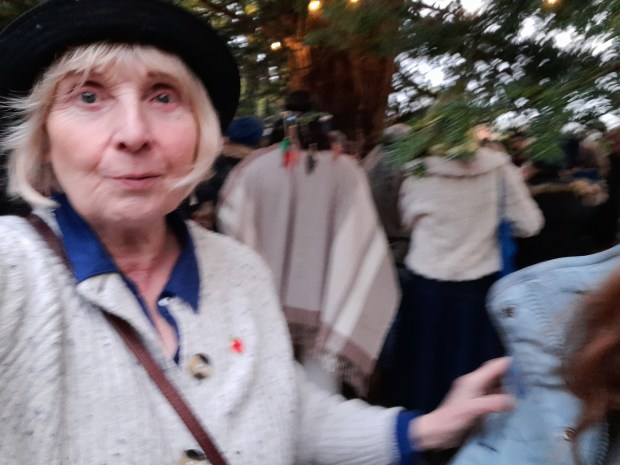
Let’s go – Chalice Well and Glastonbury for Samhain.

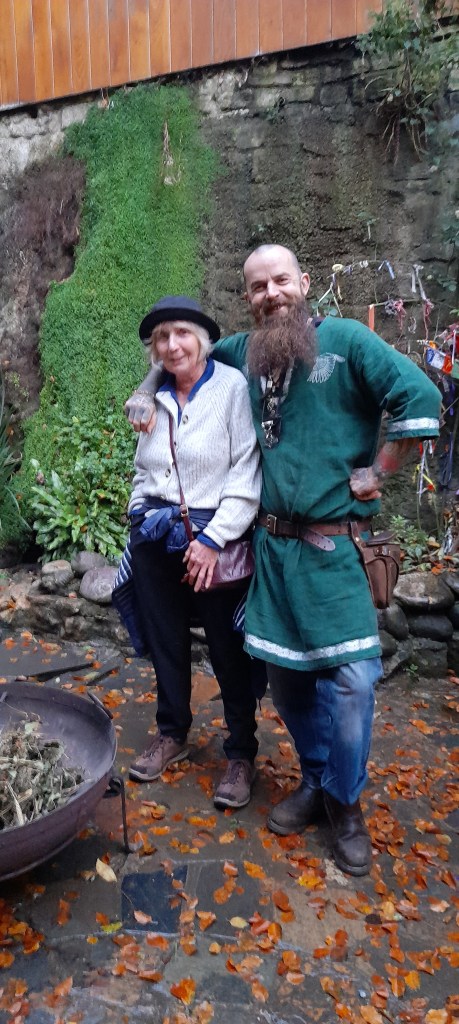
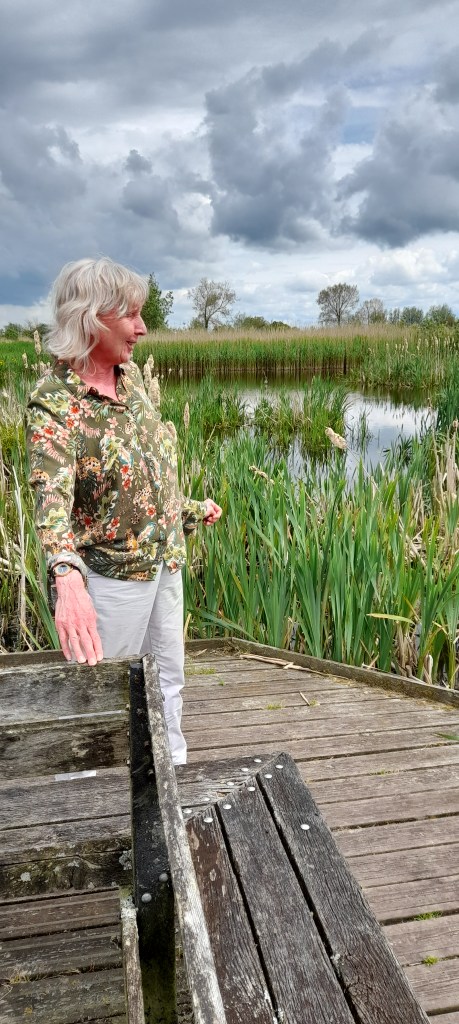
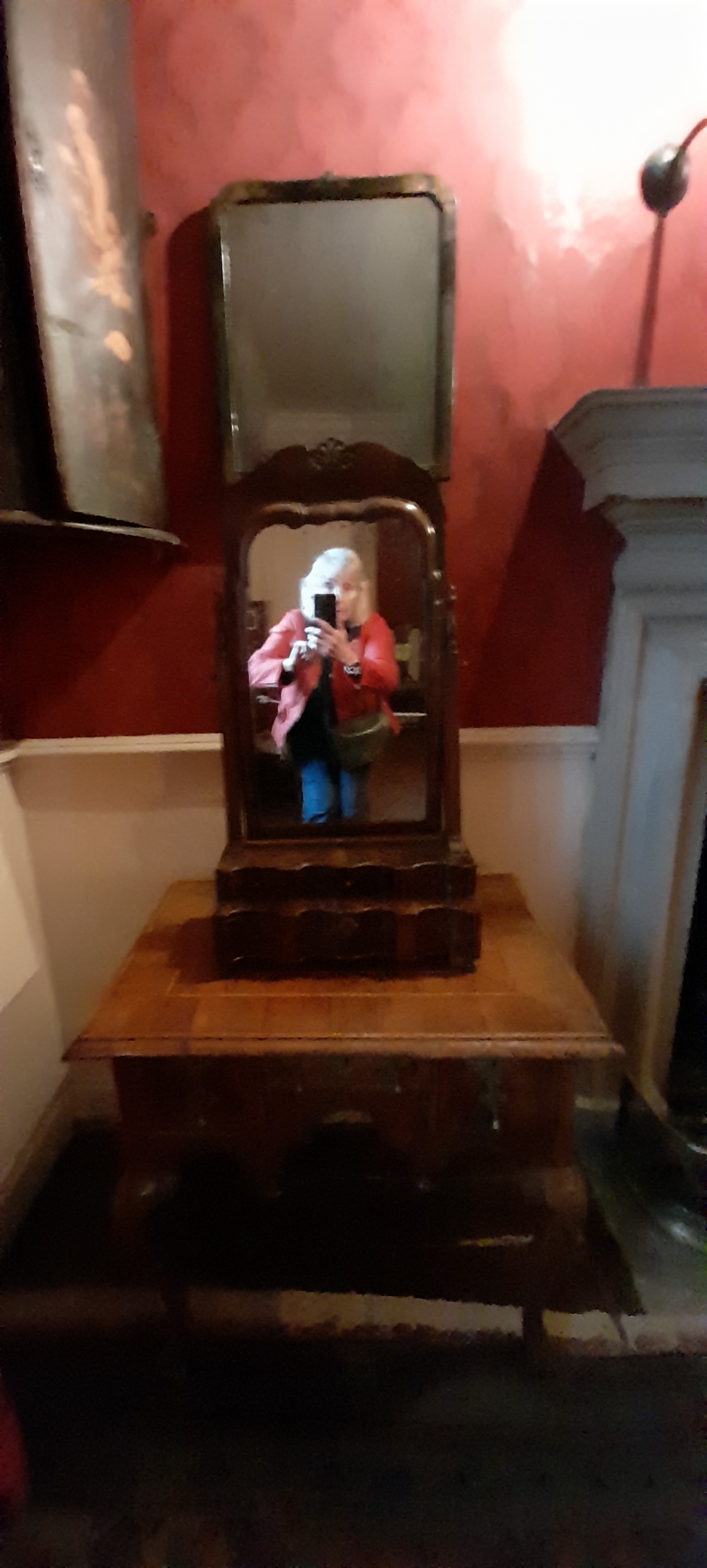
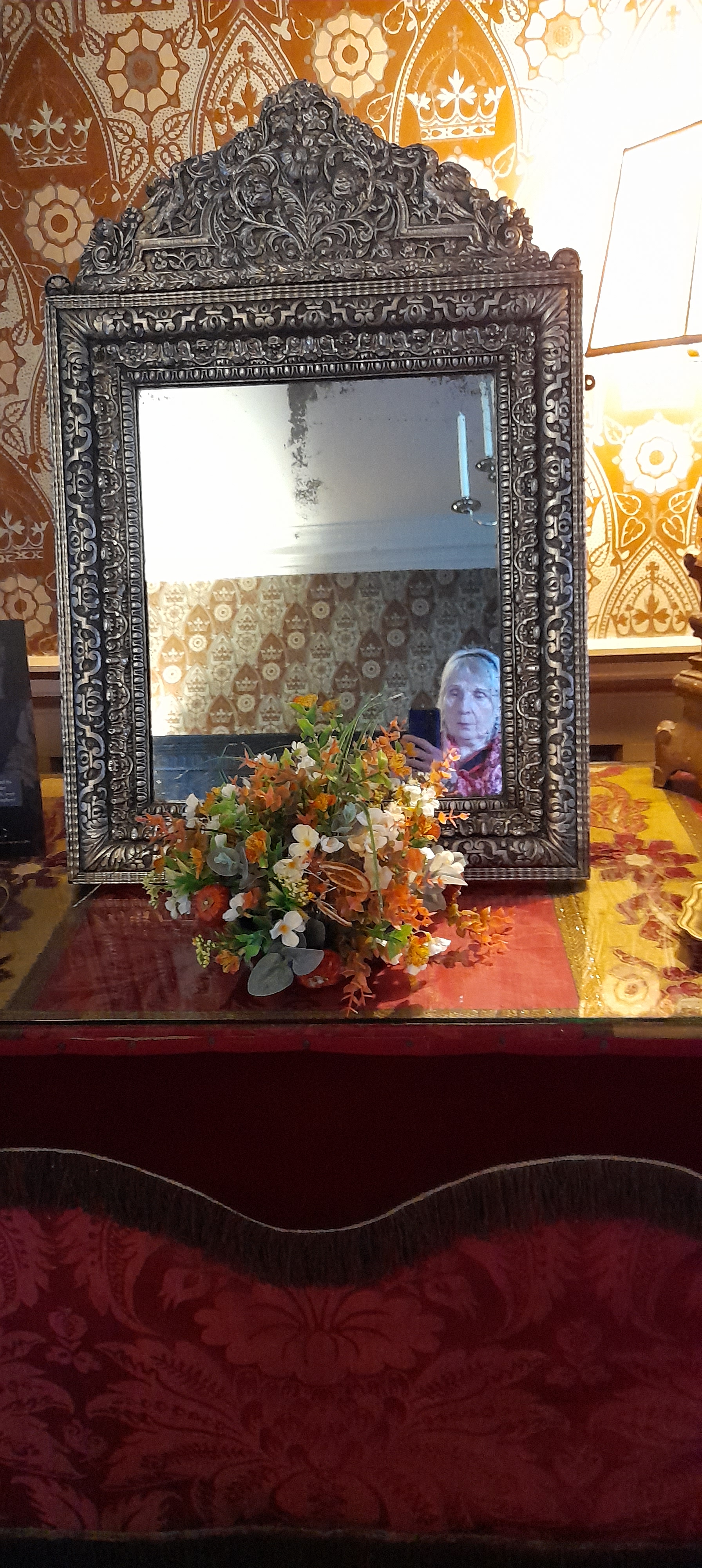
This was supposed to be a selfie but Karen moved too soon.

Many of those attending Samhain were probably Pagan or worshipped nature and nature’s gods. I respect that. I’m not a Pagan, I’m an Atheist but I get the concept of energy. And if it’s a group of people with such energy then surely the stronger the ‘current’. Albert Einstein said or it’s attributed  “Energy cannot be created or destroyed; it can only be changed from one form to another”. And if that’s good enough for him – it’s more than good enough for me 🙂

Arrived about 4 p.m. just before dusk.

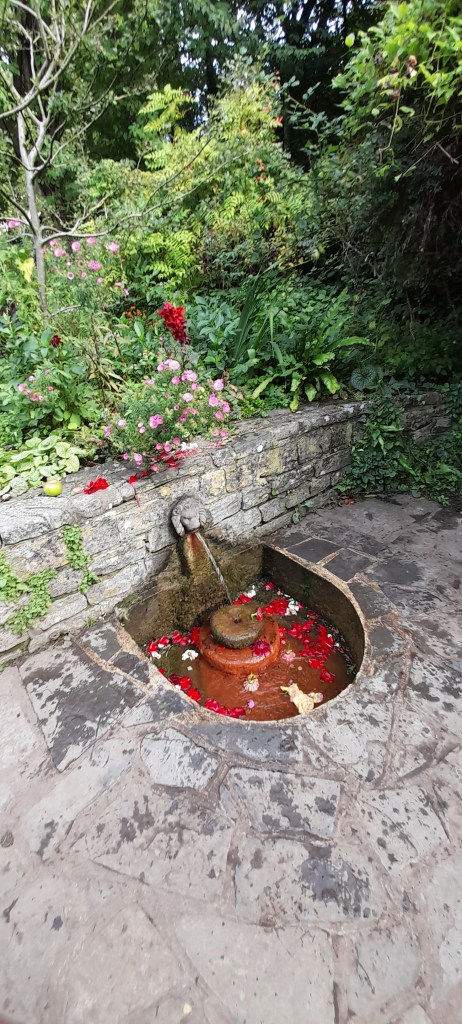
In a valley in Glastonbury, Somerset, from the ground is a spring –  the Chalice Well or ‘The Blood Well’, because of its rich iron content. The water never ceases to flow and always at 25,000 gallons per day and a temperature of 52 degrees Fahrenheit.   And of course as it’s Glastonbury – a sacred area, a foundation for many wonderful legends and tales. The spring and its waters are no  exception and include the story of Joseph of Arimathea said to have visited the site with two containers to hold the blood and water from Christ’s wounds. 

From that spring came The Chalice Well Trust – dedicated to nature and set up by Wellesley Tudor Pole a story well worth exploring.

If we are willing to show friendliness and compassion towards those who control the Kingdoms of Nature, they in turn will help us to restore health and well-being to our minds and bodies and to harmonise the conditions which surround us”

It definitely felt the best place to celebrate Samhain with its gentle and easy to participate in ceremony. As dusk fell – we all said goodbye to autumn and welcome to the winter with sage log burning fires. 
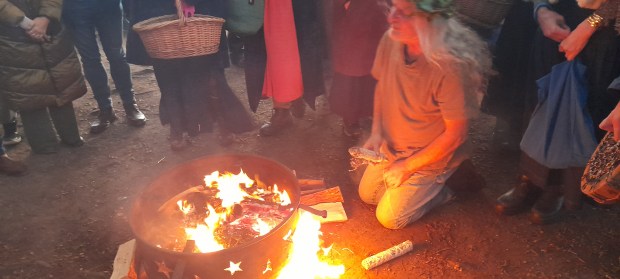
Smoke definitely does get in your eyes.

Photo bombed by a medieval axeman

People must’ve adapted these ceremonies and added to them as time went by. What is frustrating is that the Druids and Pagans and other old religions never wrote anything down about their ceremonies but shared by word of mouth.  I suppose the human psyche doesn’t alter and what felt right to the Celts 2000 years ago feels right to Celts and others now. 

It was a refreshing ceremony in one way but not so in another. The sage and wood burning although very dramatic did stay with me until I gave my clothes a very 21st Century wash. Throwing sage of the fire was the right thing to do but I was impressed by the lungs of those sitting around the fire The didn’t cough their way through the ceremony – like I did.  
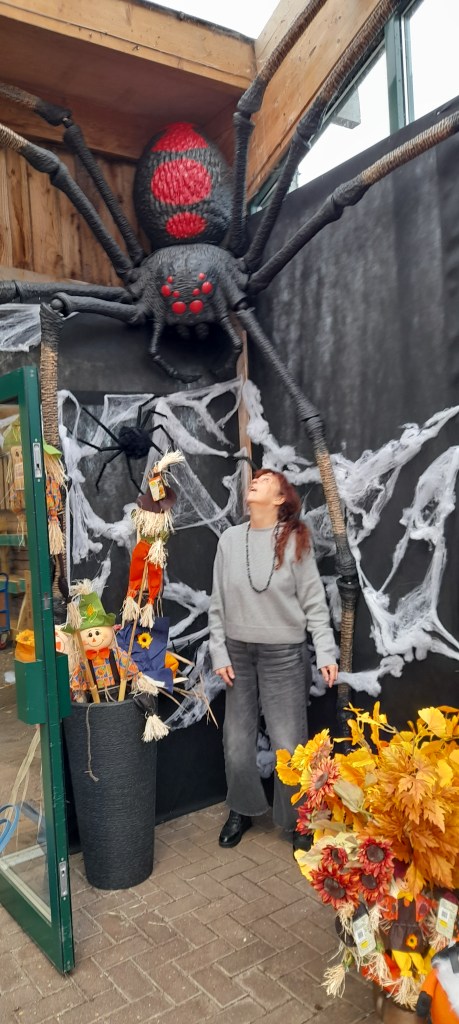
Halloween then on to Samhain.

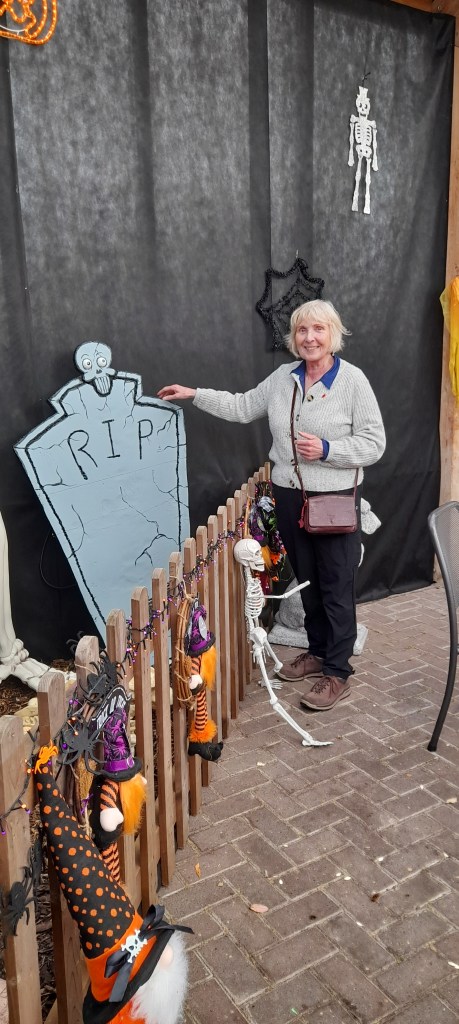
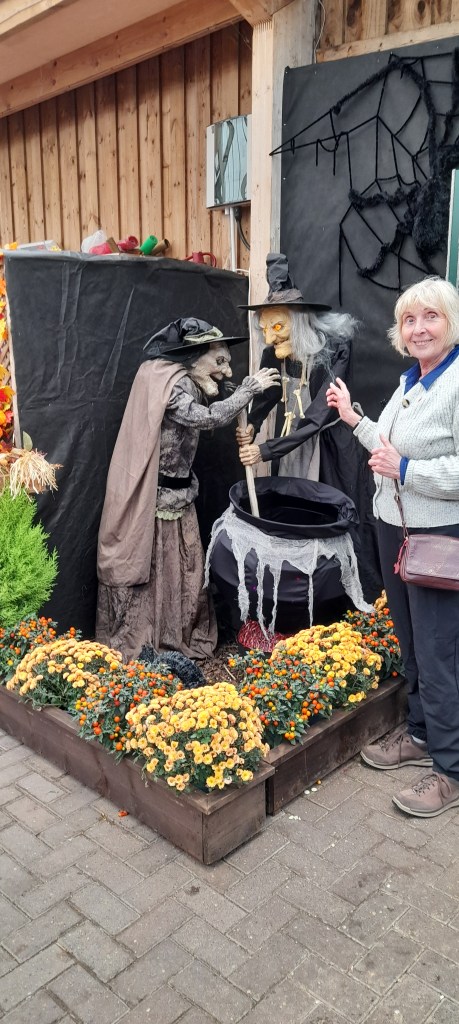
First stop the hallowed ground of the garden centre. Halloween, takes many forms within the Christian church but its Christian feast is All Souls, the day to remember the dead, followed by a day for hallowed saints – All Saints.

Secular Halloween, is a bit difficult to explain – in some countries it’s a time of visiting the departed but I get the impression here England it’s a time to embrace our fear of the unknown in a jolly way.

As with any good feast day – it needs secularisation to bring the people in and make it less bad spirits and scary, and more bright and breezy. So colourful cartoon characters and the chance of an assortment of sweets are what attracts people.

The British way of celebrating Halloween is different from the Hollywood style of ‘glamour’ and razzmatazz of the USA – lavish parties and film hero costumes. While in Britain we tend to go for “From ghoulies and ghosties and long-leggedy beasties, and things that go bump in the night, Good Lord deliver us!” a protection prayer – debated whether from Scotland or Cornwall, and probably handed down by word of mouth rather than a prayer book. Yet in the nice bright garden centre – everything was pretty upbeat.

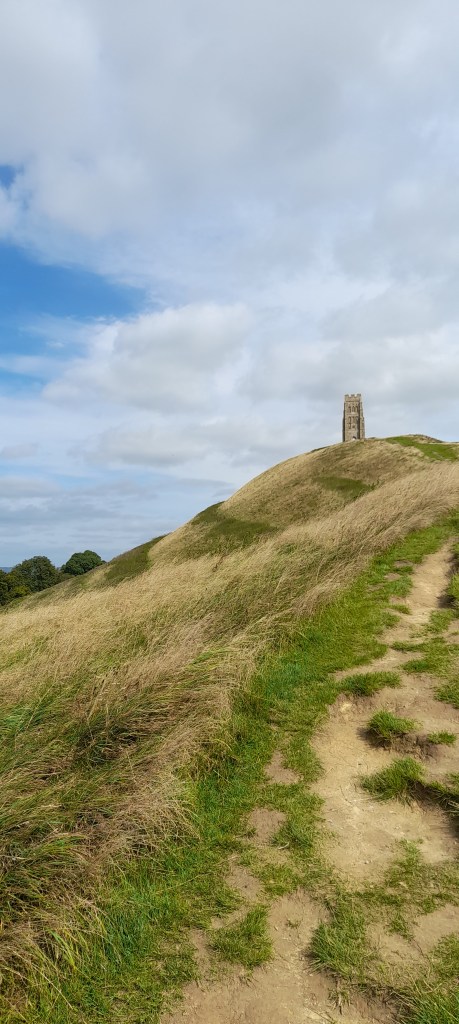
Next stop Samhain at the Chalice Well, Glastonbury.

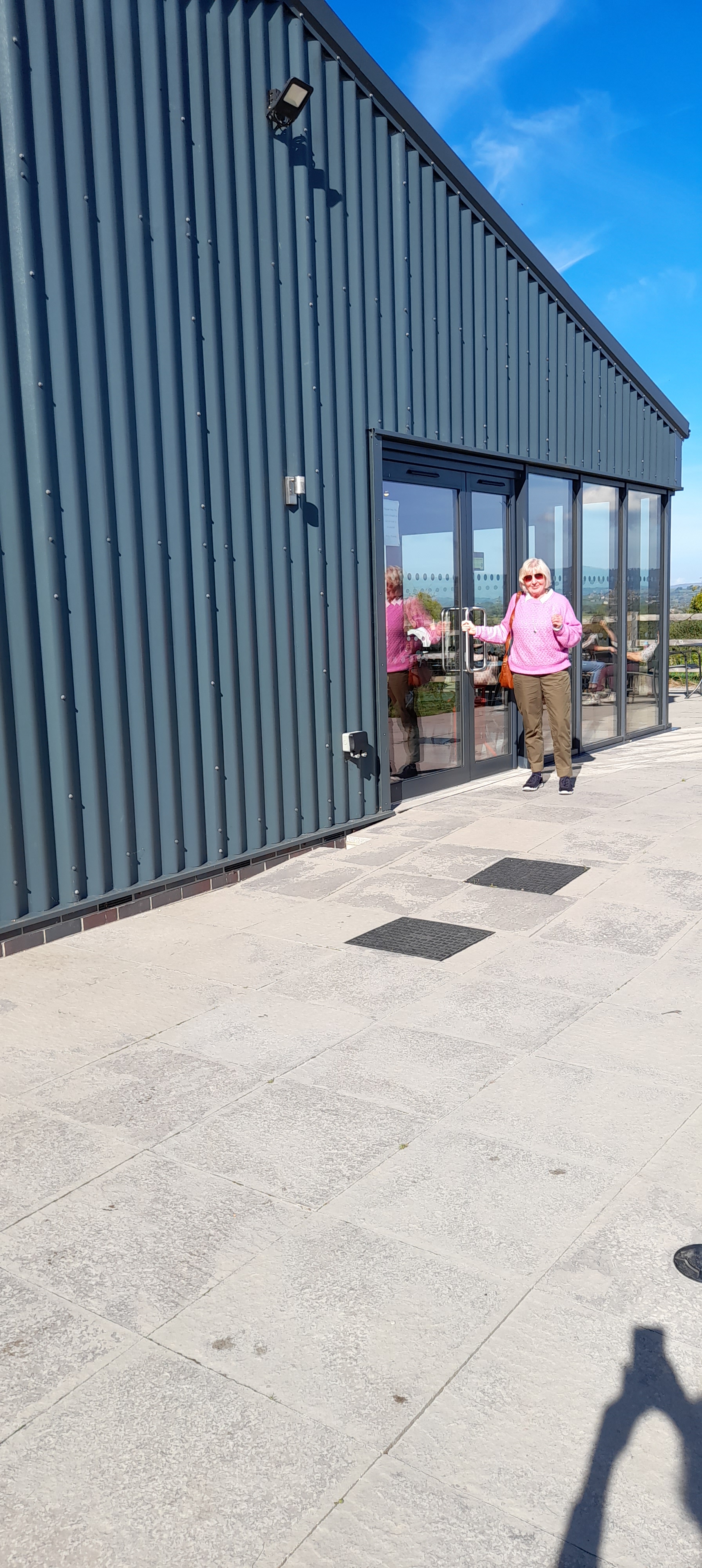
Brunch at The Middlewick, Farmstead, Glastonbury, Somerset. But onto the Tor and the ‘Sacred Waters’ at The Chalice.  

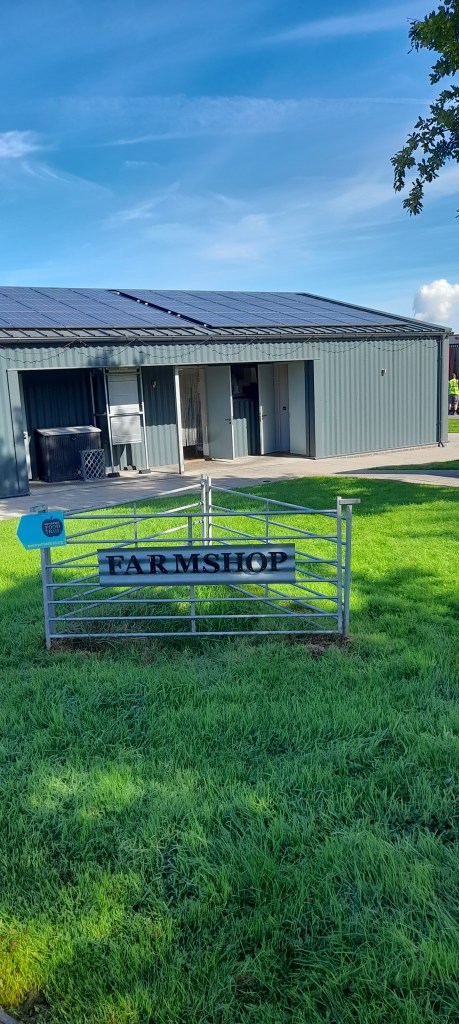
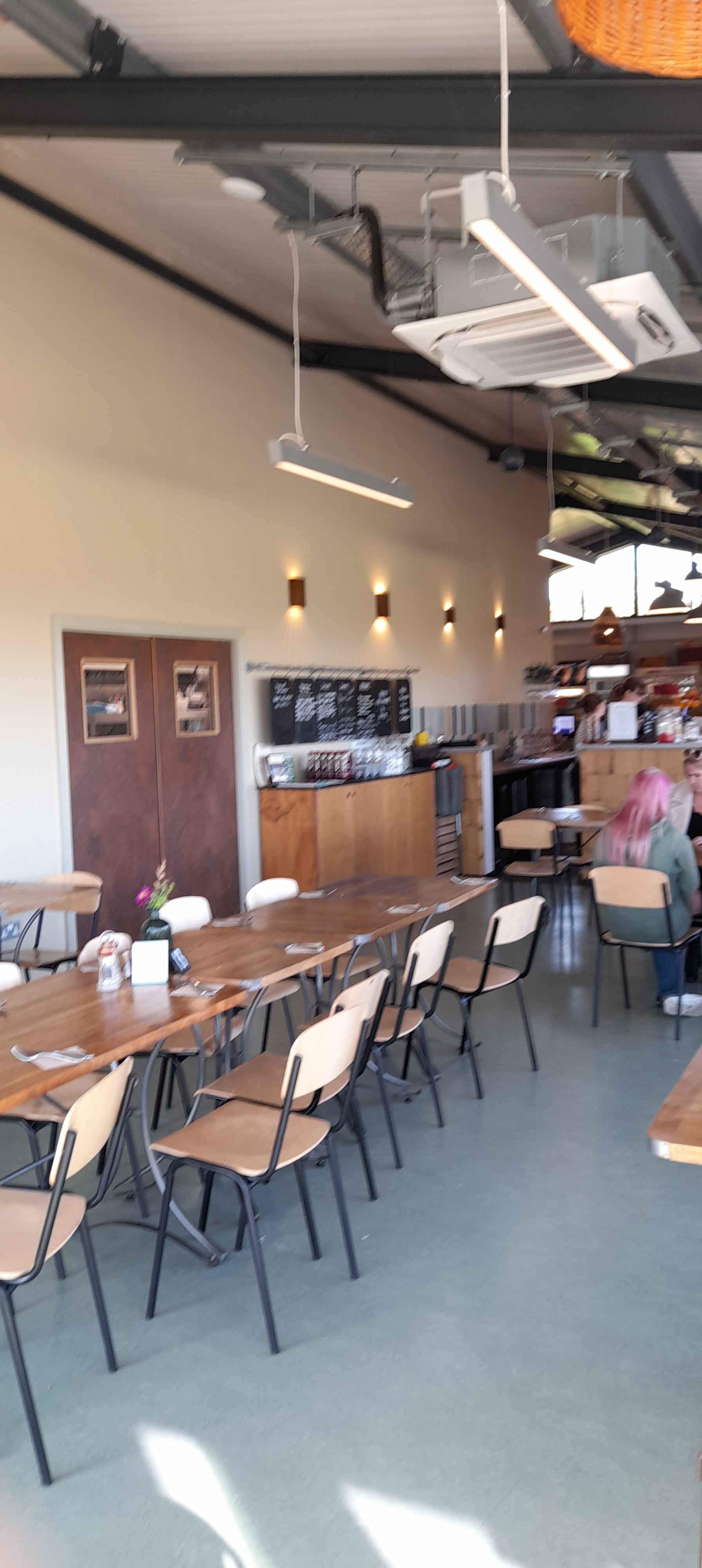
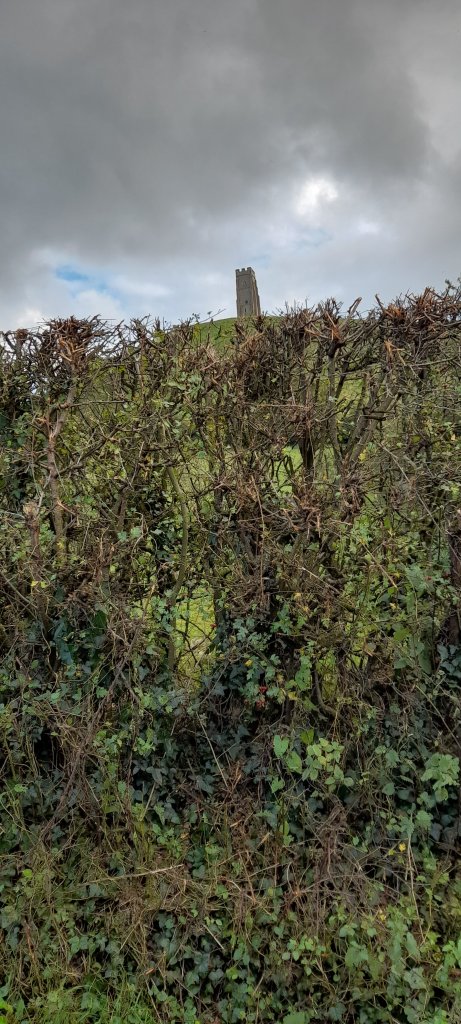
Set within 16 acres of Somerset’s beautiful countryside and for added enjoyment a good view of the Tor and St Michael’s tower Middlewick farm shop and cafe is worth the ride out. To get there I suppose ramblers could ramble, and cyclist could cycle but I didn’t see many buses. Having said that people managed to find it and the cafe was busy both inside and out.

It’s an eco-friendly cafe, farm shop and spa. I really don’t care that it’s eco-friendly I was jut there at the cafe for brunch. Although the spa was interesting – converted shepherd’s huts which add to the rustic feel. We walked straight passed though and into the cafe, which isn’t rustic at all! But the food was nice – vegetarian of course.

My food critique is minimal as both my friend, Karen, and I are vegetarian so it’s not going to be an adventurous journey of culinary delight – I’m more interested in where I end up eating it and how easily it is to access those vegetarian delights. It’s lovely to be in the middle of the Somerset countryside and worth every adjective and cliche – I feel privileged to live there.

  And onto the Tor – eventually

Brunch, Cars and Chrome

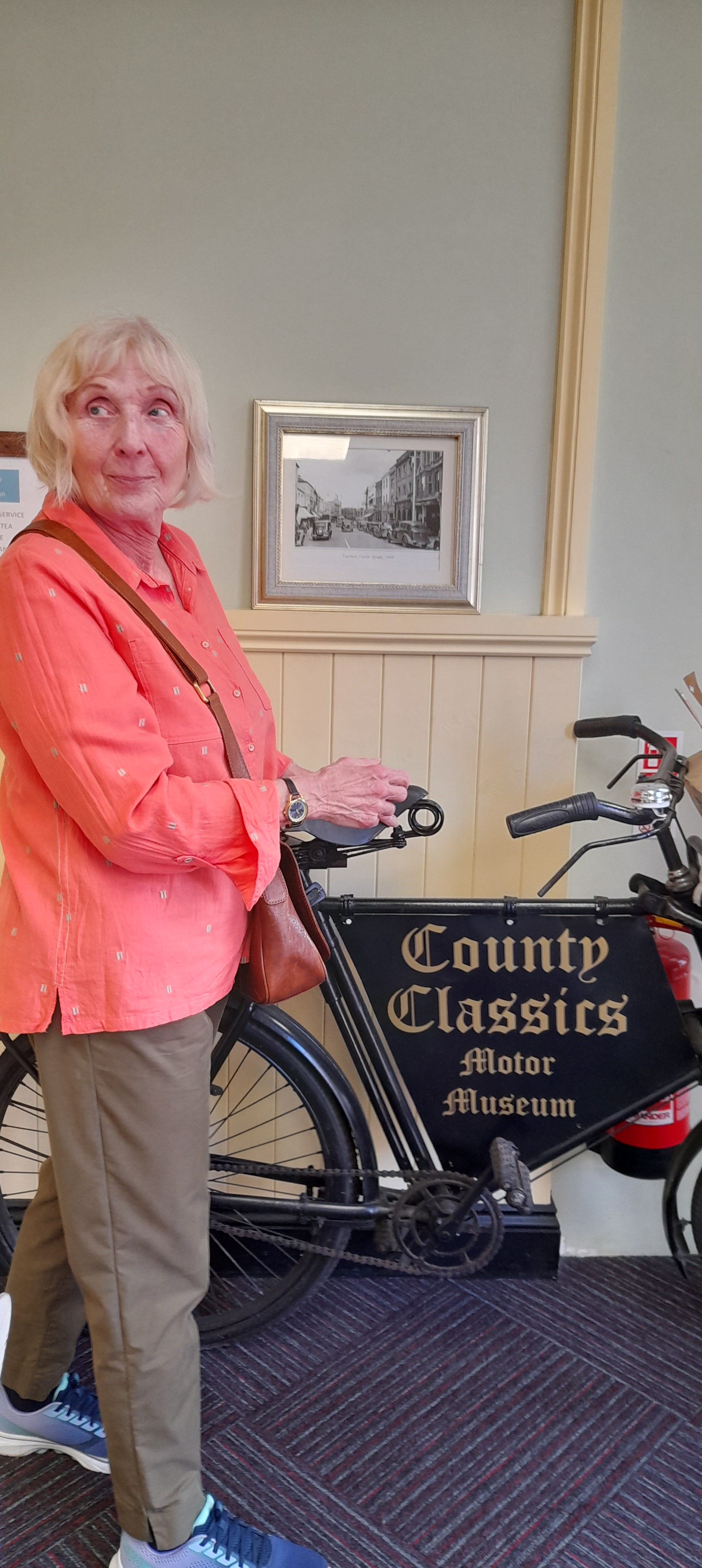
County Classic Motor Museum in Taunton, Somerset

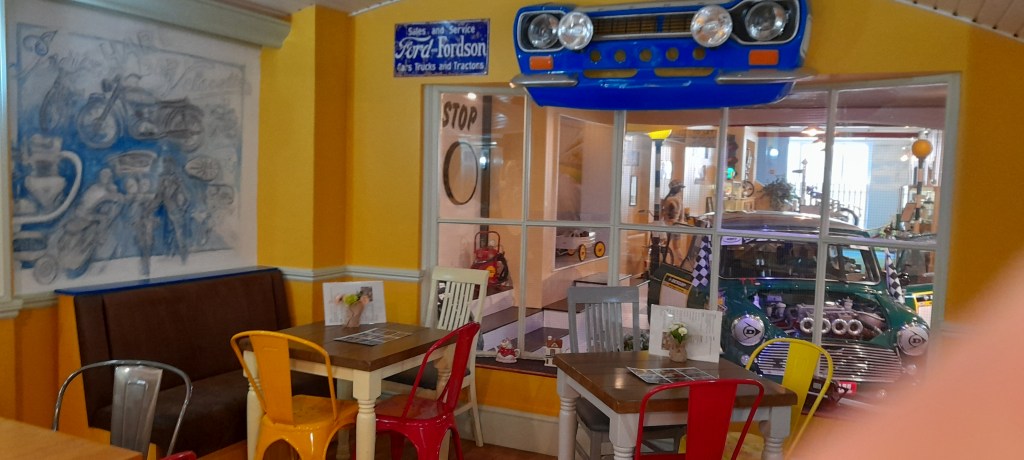
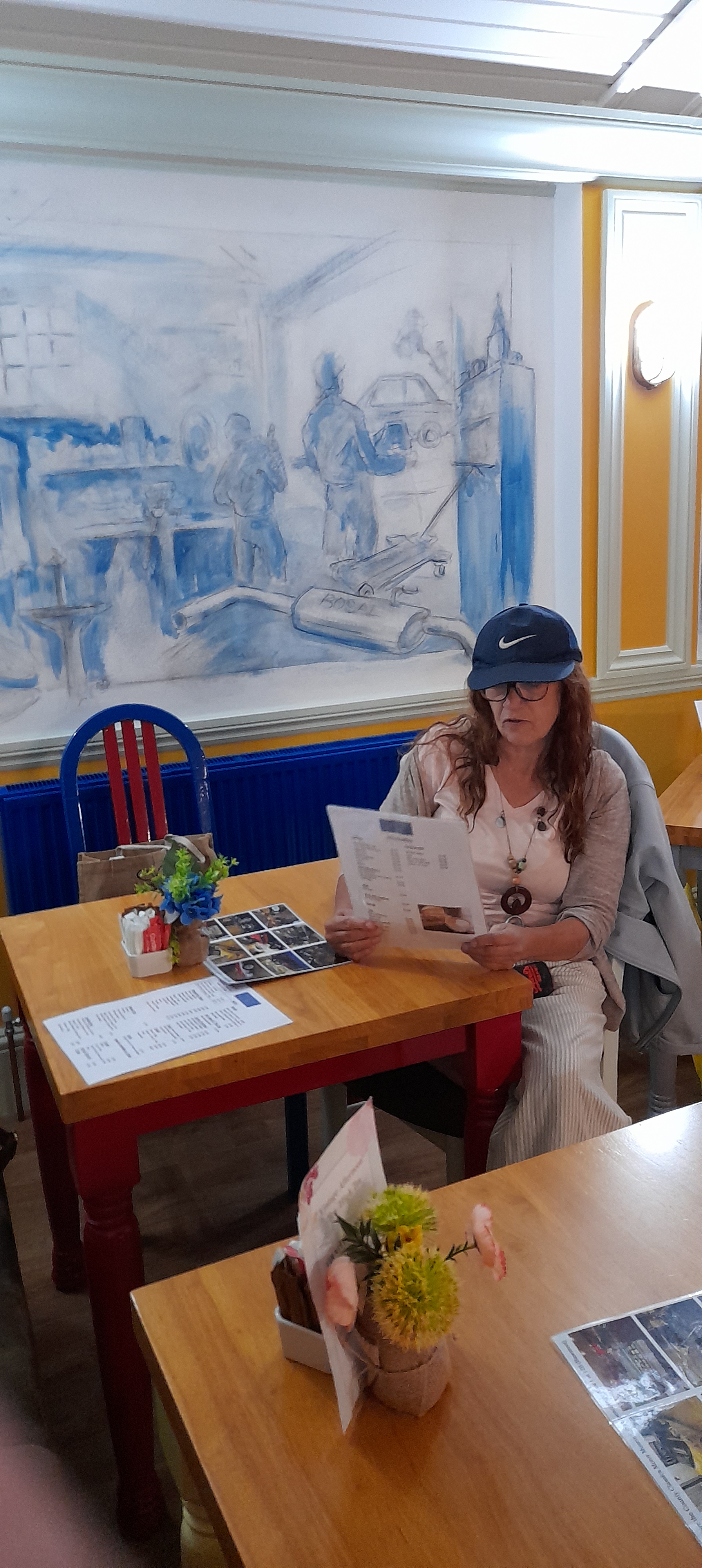
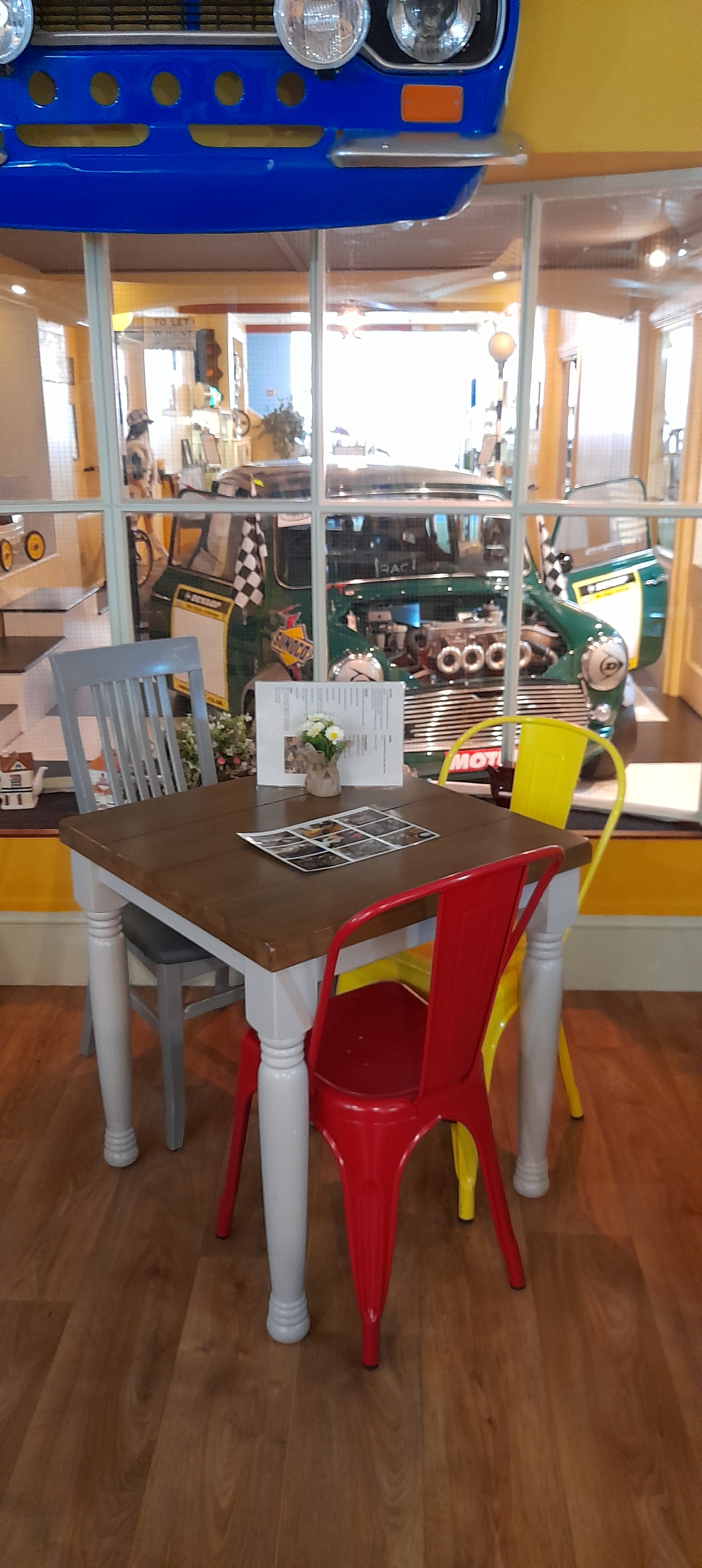
For my first (to be written up brunch) my friend Karen and I took a visit to the café at County Classic Motor Museum in Taunton, Somerset.  The much loved museum and great ambition of Patrick Hawkins – who at the age of 11 years, bought and repaired his first vehicle, and didn’t stop there.  A welcoming museum, even for non-car enthusiasts  but it was the café that drew me in.

The photos should speak for themselves – a lovely colourful, chrome burnished environment  with cars mostly ranging from late 1950s to the 1980s  and motorbikes from 1915 to the 1980s.  Opened in November 1923 by Richard Hammond, the opening attracted a crowd of people many bringing their own well-polished vintage cars, motor bikes and even uniforms. I remember a panda car with a ‘Z Cars’ vibe. 

We headed straight for the onsite café.  I won’t describe the menu, instead  I took a photo. Although Karen and I are both vegetarians – neither of us are Evangelical. To be honest  – I wish I wasn’t – vegetarian that is.  I’ve been vegetarian for at least 30 years – I can’t remember why I started, because it wasn’t the era of the smug middle classes nor was it a time for Vegan food that looked like meat but tasted of…. I’m not sure but not food that’s ever seen a field.  I remember that I ate a lot of jacket potatoes and beans. 
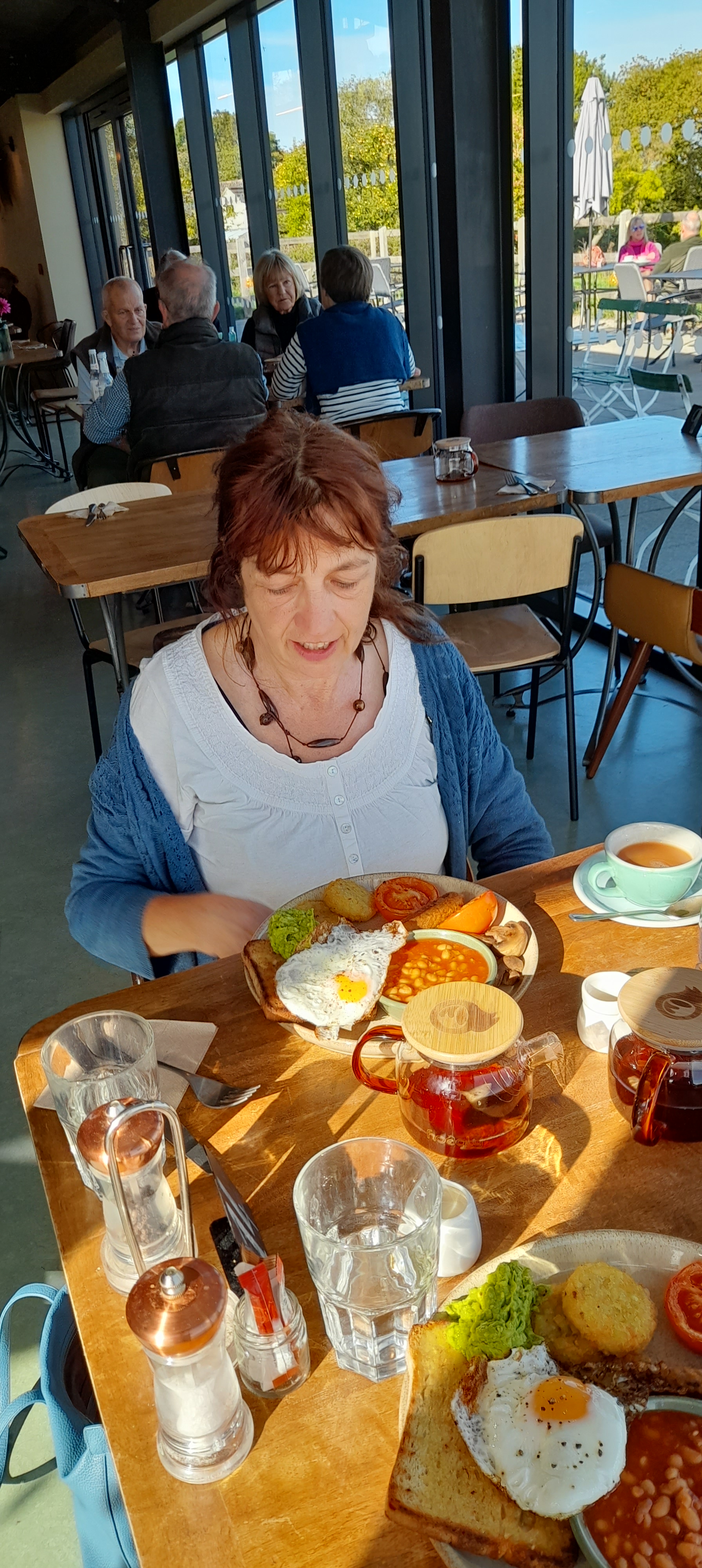
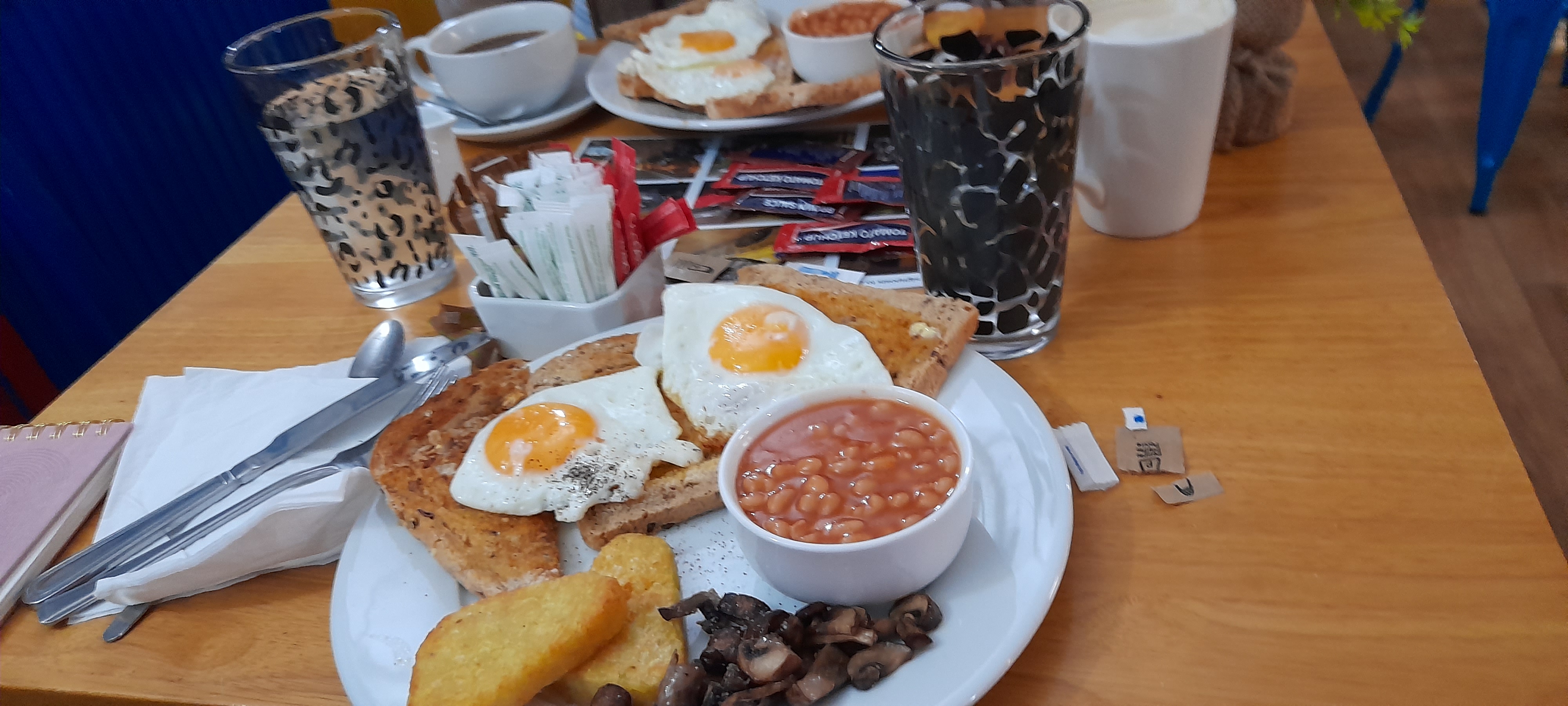
Having said that  we ordered a vegetarian breakfast, which wasn’t on the menu but the creative and kindly staff pulled together, well cooked eggs, perfect toast (not sourdough, which rips your mouth to shreds) baked beans, a potato fritter thing and mushrooms. That really tasted like food.

I’m not a food critic and I don’t aim to either promote or criticise the food of the places I visit.  I’m not really choosing places for what they serve but where it’s served. To experience a welcoming and interesting ambiance, décor, history and hopefully just be left alone to either read or gossip whether it’s a coffee or a full blown brunch.

Burrow Mump Somerset

Not as touristy as the Tor – so you sometimes get it all to yourself.

History-

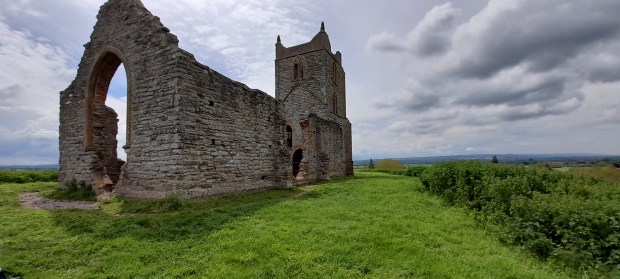
Burrow Mump is a monument of both strategic and archaeological importance. When you reach the top you understand why . It overlooks the Somerset Levels and Southlake Moor in the village of Burrowbridge in Somerset. Dug out by the Normans as a defence the view is 360 degrees and stunning. It stands at the junction of two rivers that cross the Somerset Levels. The Mump itself is now designated as a War Memorial and was donated to the National Trust in 1946 to commemorate the Somerset men and women lost in World War I and World War II. 

The church – started in late 1700s was never finished – run out of money -but is thankfully a Grade II listed building. I’m not an architect so I won’t go in to its construction but I’m told the church was situated, sensibly to look down on a settlement but no evidence of that now. Before that it was the site of a medieval church. It doesn’t feel like a unfinished ruin – I think it would’ve been beautiful. Once surrounded by marsh land the mump would’ve floated hauntingly and gothically out of the waters of the Levels.

I’ve climbed to the top a few times and have slid down (not on purpose) twice. Nonetheless – I still enjoy the climb and descent!

It’s a Good Excuse for a Big Breakfast.

Over the past couple of years, I’ve taken to going out on a Saturday morning for  brunch or it might look like breakfast.  I try for 10.30 ish and must take a book. I must also go alone, so that I read said book and only I decide where to go, which is usually a choice between two low key cafes. 

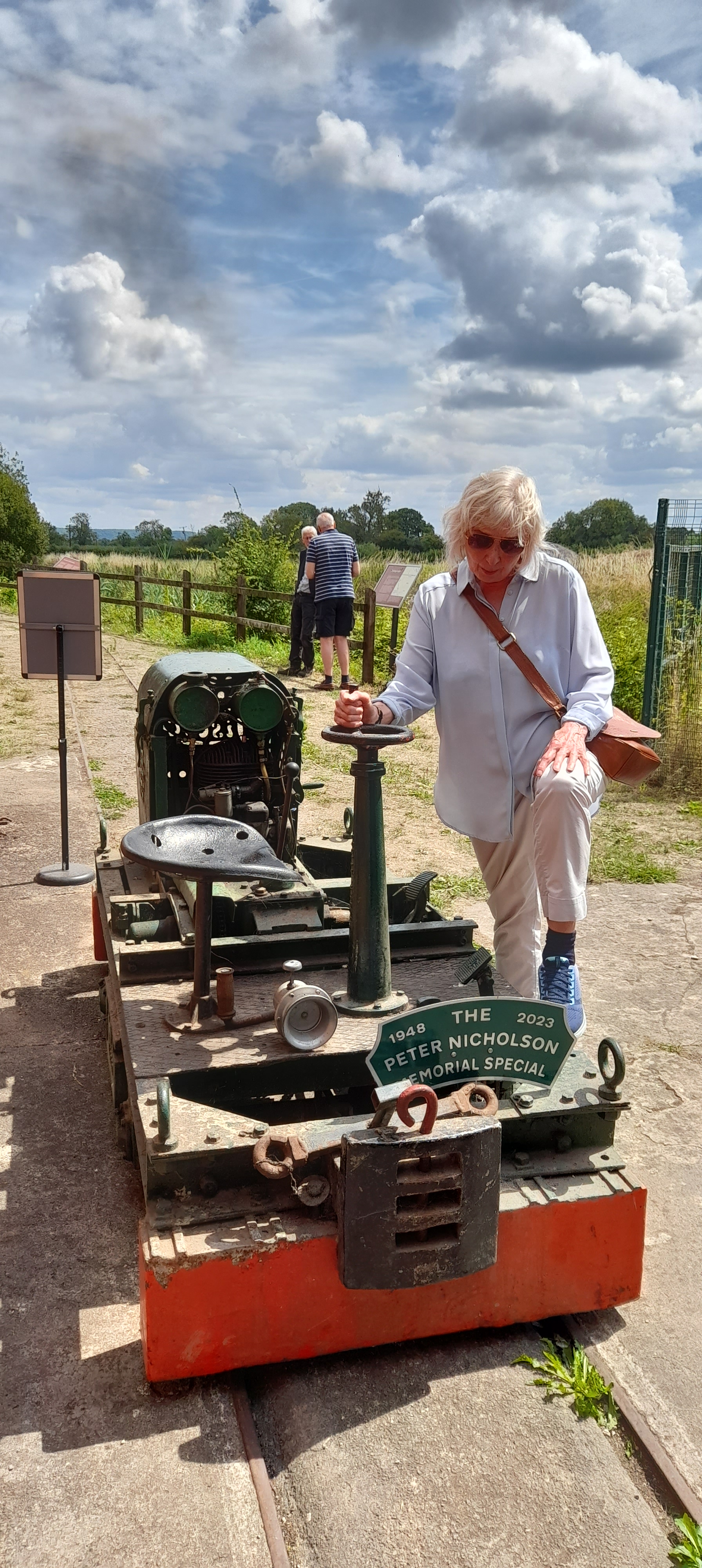
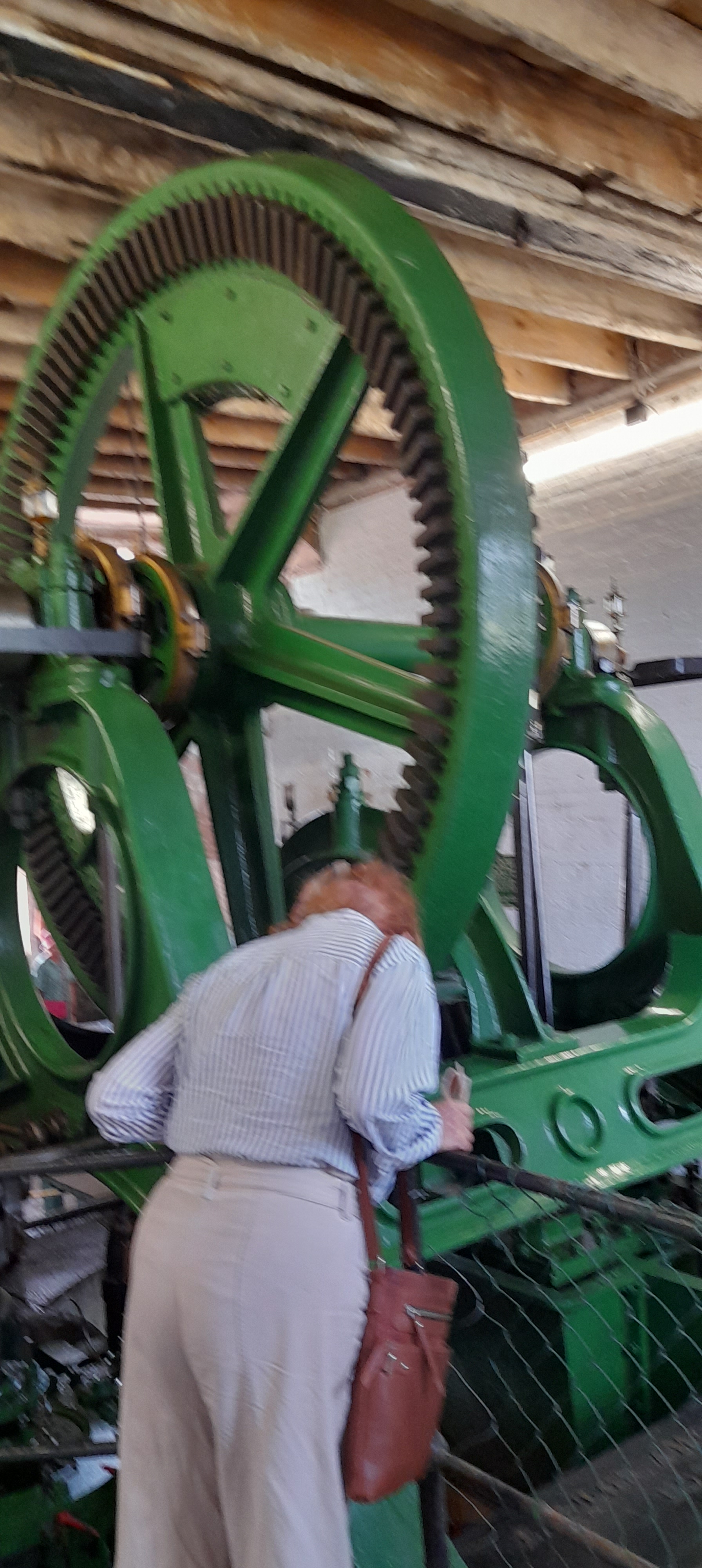
It wasn’t until I was out with a friend, Karen, on our way to Westonzoyland Pumping Station in glorious Somerset, to admire the wonders of Victorian Mechanics – photos below for interest – that I hit on the idea of doing  a blog about brunch. The reason it came to me was that we stopped for coffee, read the menu and wanted brunch but were 5 minutes too late.   We decided to leave earlier next time.

Karen knows many quaint and interesting places to eat it was then that we hit on the idea of trying to eat brunch – won’t call it breakfast, in as many cafes as possible in Somerset.  In order to make this less gluttonous I decided to write about every place we visit – not too many words but hopefully some nice colourful photos. 

I was surprised to discover that Brunch was introduced  in 1895 by an English writer Guy Beringer in his book ”Brunch a  Plea”.  Following alcohol filled Saturday nights, I believe he made a request for comfort food but not a big Sunday lunch.  It’s obviously a blending of breakfast and lunch but can be more fun when it involves alcohol.  Purists will have very specific food served but the English seem to have prioritised a full English breakfast as its staple but it can include upmarket, fusion food, fresh fruit , Bucks Fizz, kedgeree, avocado and even black pudding I suppose and cake!

We’re both vegetarians but not evangelical about it so our choices might be uninspiring and a bit pedestrian.  Therefore to make up for this it’s going to be the interesting hostelry that counts not the food.

That’ll be the next blog.  I’m going to enjoy it if no one else does. 

A Family Home with its own Chapel.

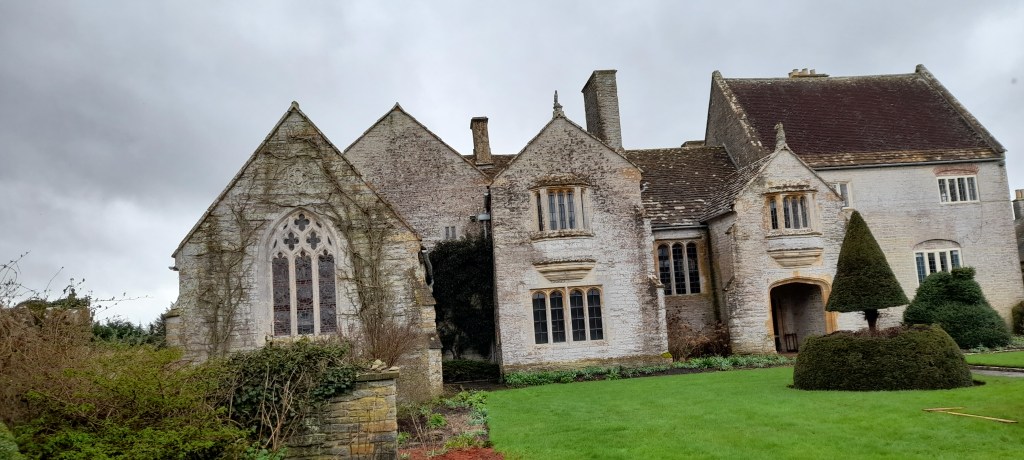
Lytes Cary Manor

I don’t know much about architecture but I like to look at old buildings and I love the way that 21st Century visitors blend in and bring them to life.

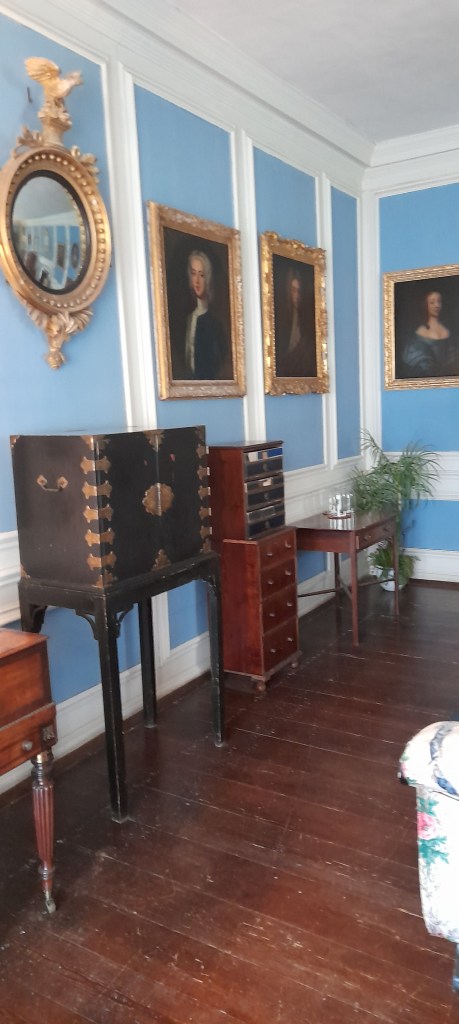
For me it’s all about big stone houses, dusty smells and helpful volunteers. I don’t try to give lots of facts, I prefer the photos to do the talking. Lytes Cary Manor has all that. It didn’t really feel like a manor more like a family home – a family made good not born noble.

The first of the family to live there was William le Lyte, a feudal tenant, as early as 1286. The chapel dates back to 1343.

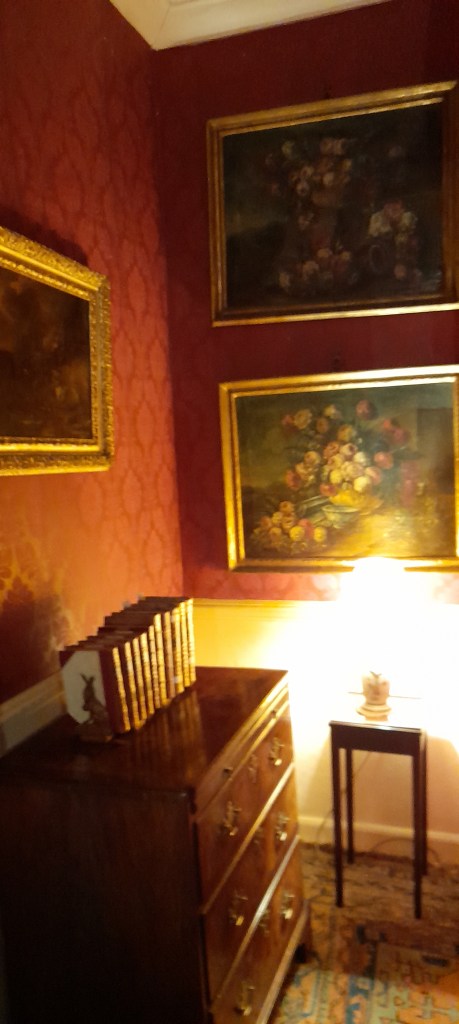
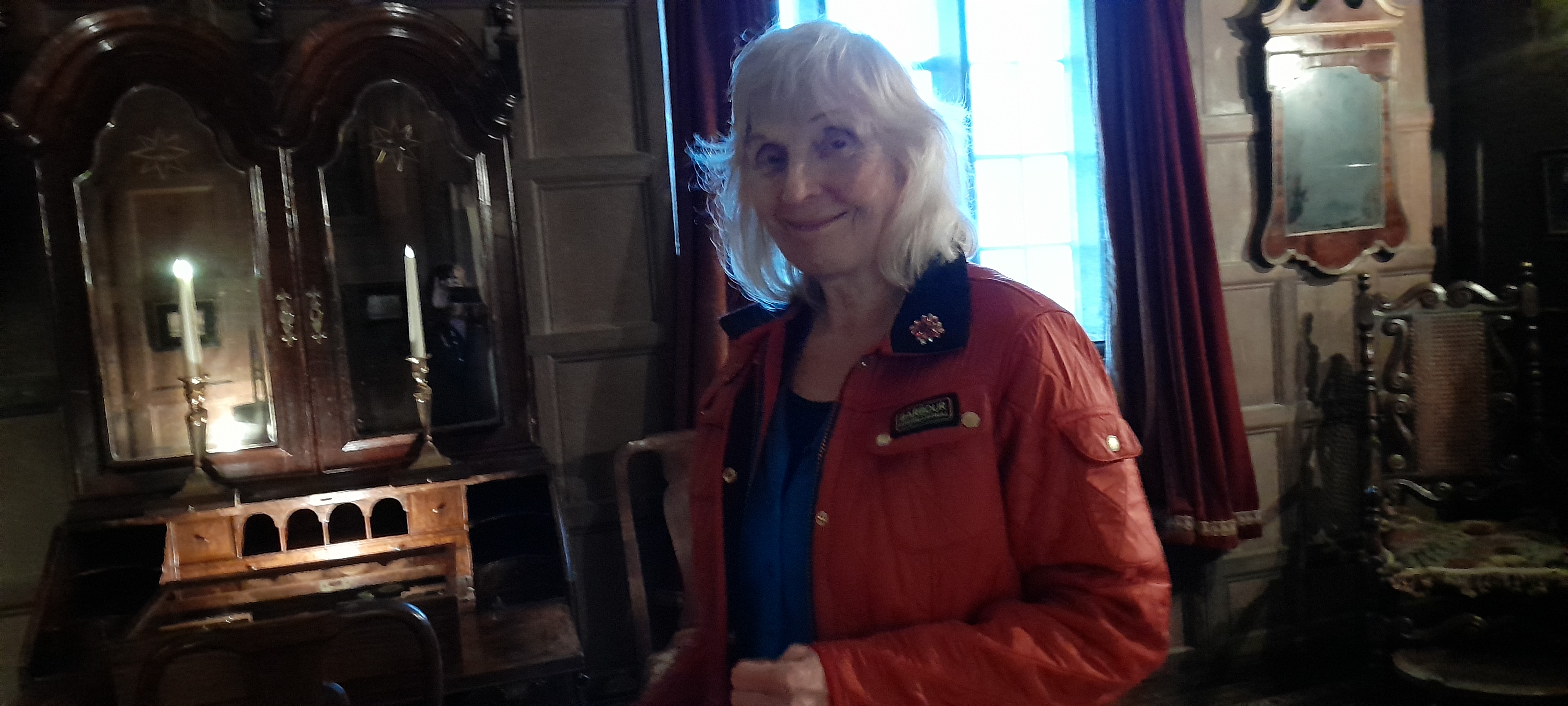
I found the house very atmospheric with a lived in feel. And volunteers sitting in the rooms appeared to be really at ease and comfortable.

Sir Walter and Lady Flora Jenner took over the house in the early 20th Century, restoring the rooms as they were/or should’ve been in the 17th Century. I got a bit of a Bloomsbury Set vibe in the house and Gertrude Jekyll feel from the garden. But I’m no gardener.

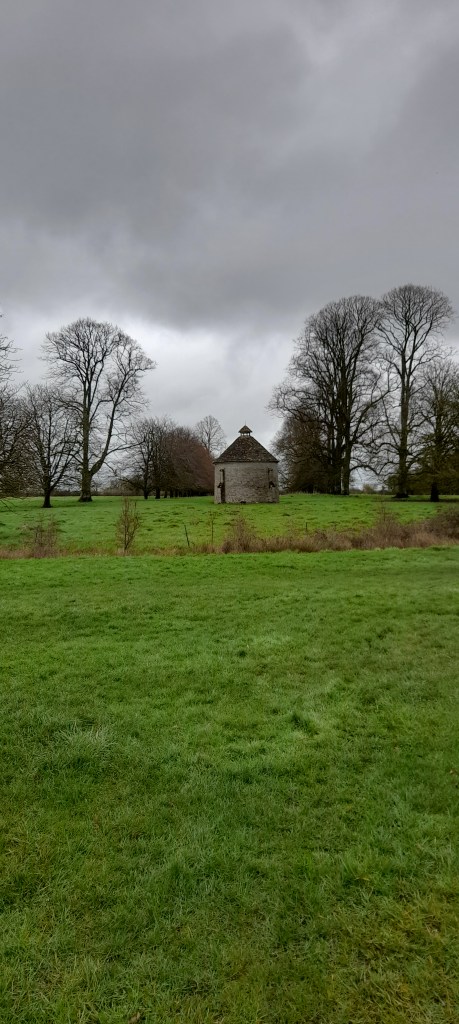
 We didn’t reach this wonderful Dovecote as it was really sploshy and muddy but it’s definitely worth a photo. Built in the 1930s but inspired by the 18th-century dovecote at Avebury Manor in Wiltshire.

England’s Christmas Stately Homes.

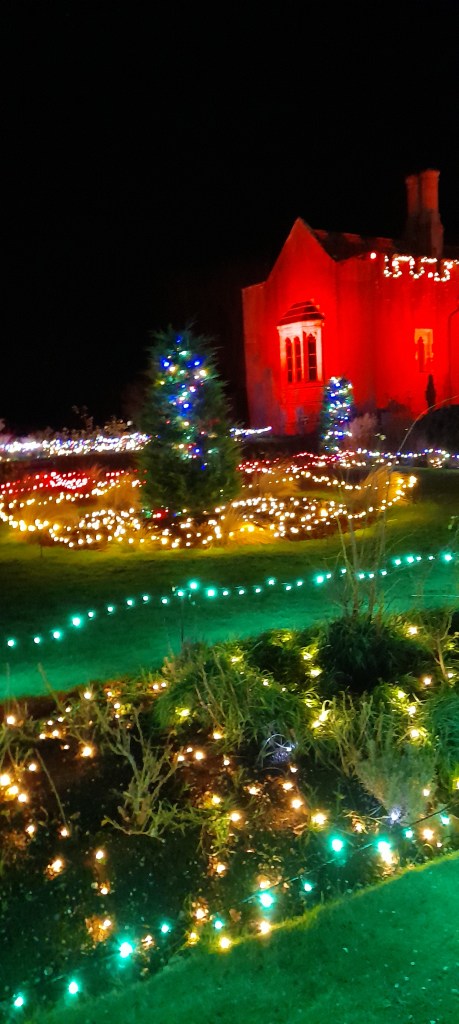
It’s time to lower the drawbridge, throw open the heavy gates and light up castles, fields and barns to the masses!

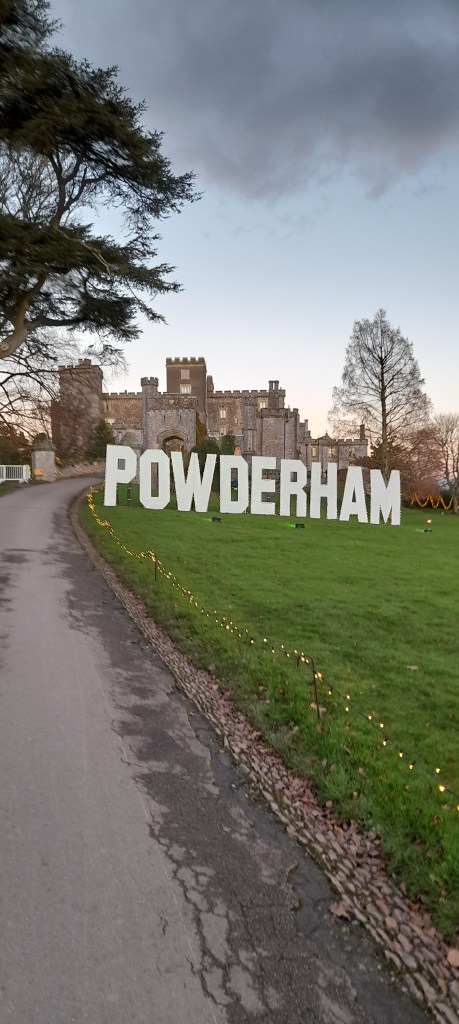
Powderham Castle.

Home to Charlie Courtenay, 19th Earl of Devon, and his family. 

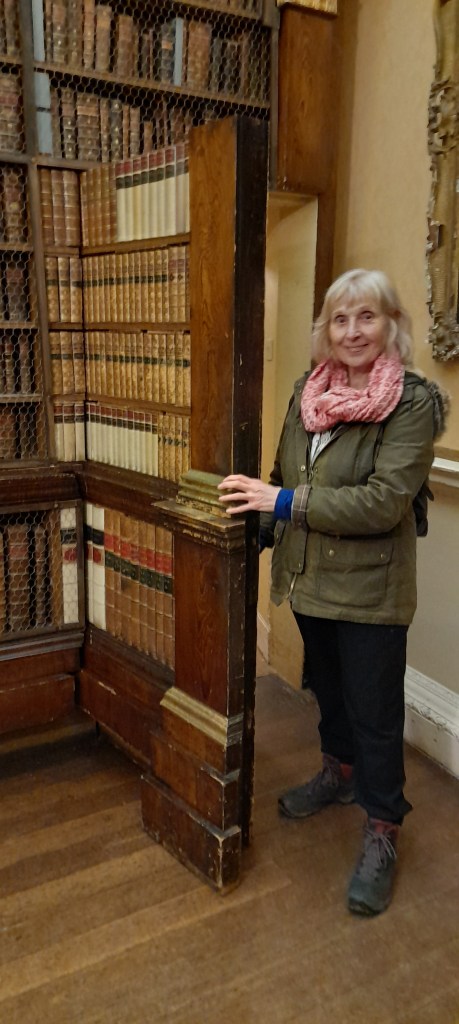
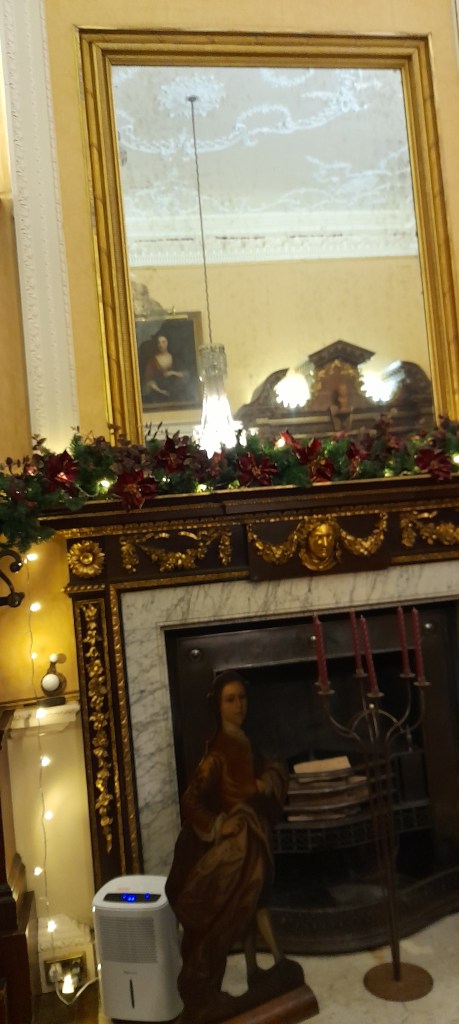
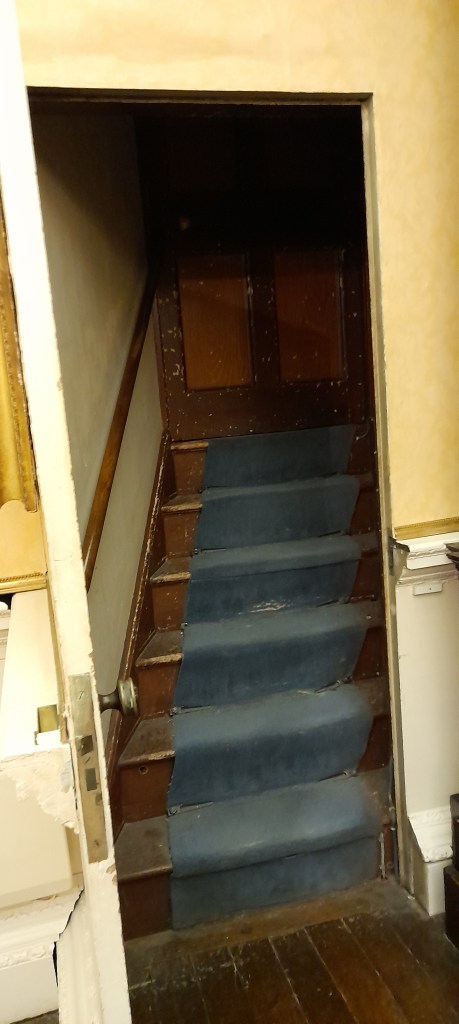
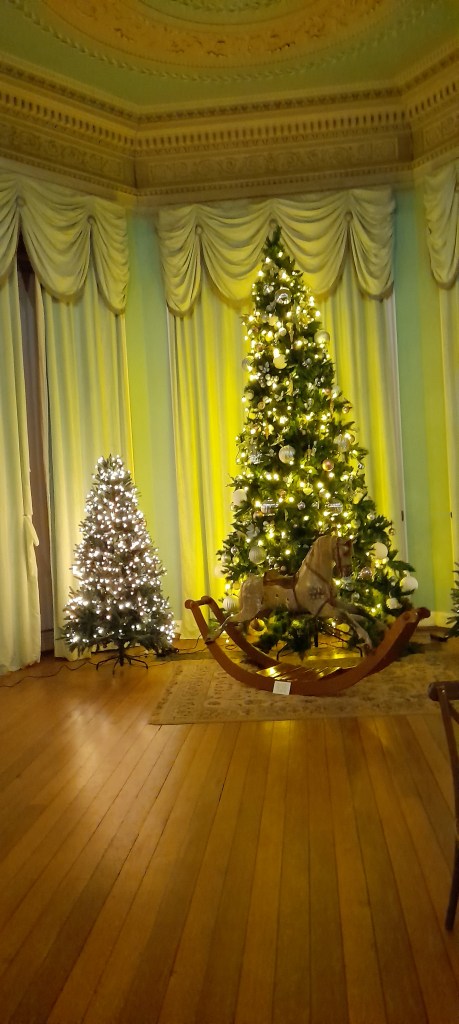
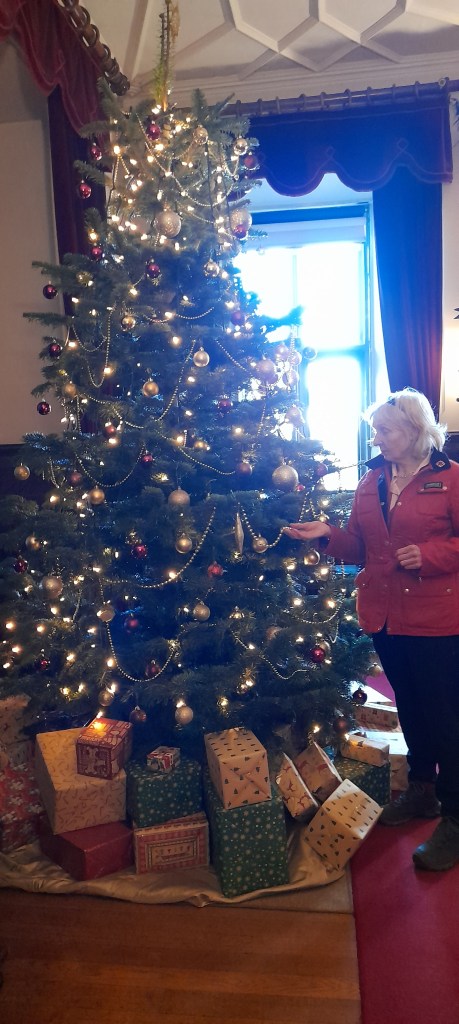
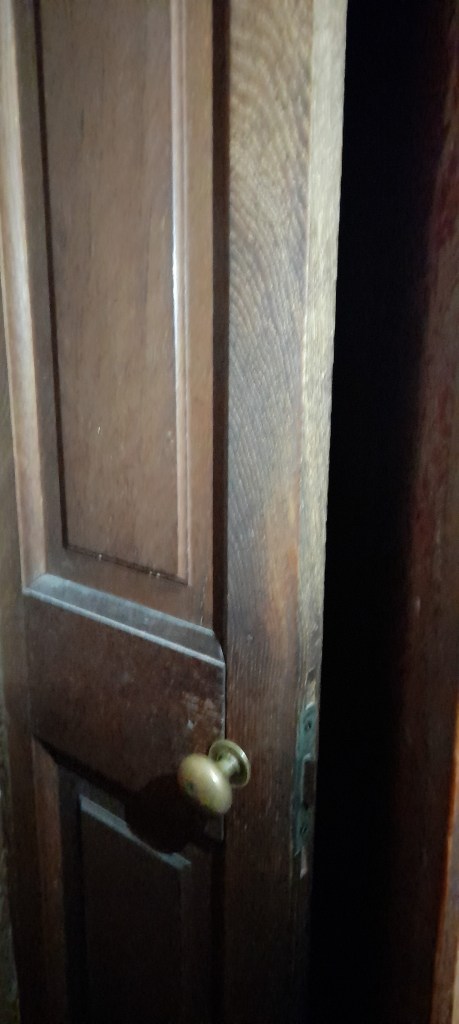
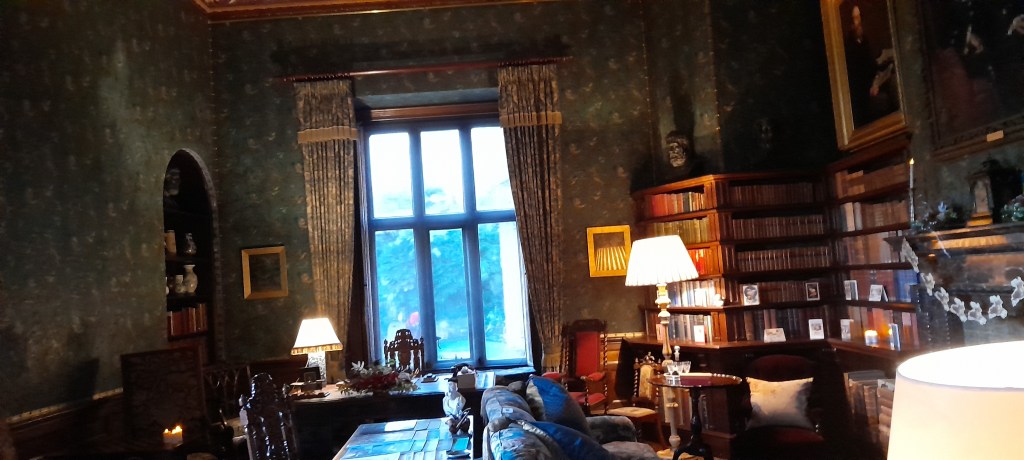
Originally built by Sir Philip Courtenay in 1391. the castle has had many incarnations, add ons and remodernisations – but I’m not here to describe its history or architecture, as I’m no expert. I just enjoyed the Christmas feel, the lights, the volunteers, secret doors and even windows. The tables, not bare or only covered with crisp white table clothes but laid out for elaborate dinners. The beds were made up, jigsaw puzzles on tables, secret doors behind bookcases, with ghost stories about the ‘Grey Lady’ ghost. Debatable where she actually appears or may wander but we were assured that she is often sensed by visiting dogs on the first floor landing. 

Next on the trail:

Dunster Castle.

Built on land invaded by Saxons in 700 AD and named after the Anglo Saxon general Dun/Dunna. Dunster Castle itself was built in 1376 and owned by the Luttrell Family until taken over in 1976 by the National Trust and lovingly maintained by their enthusiastic volunteers. 

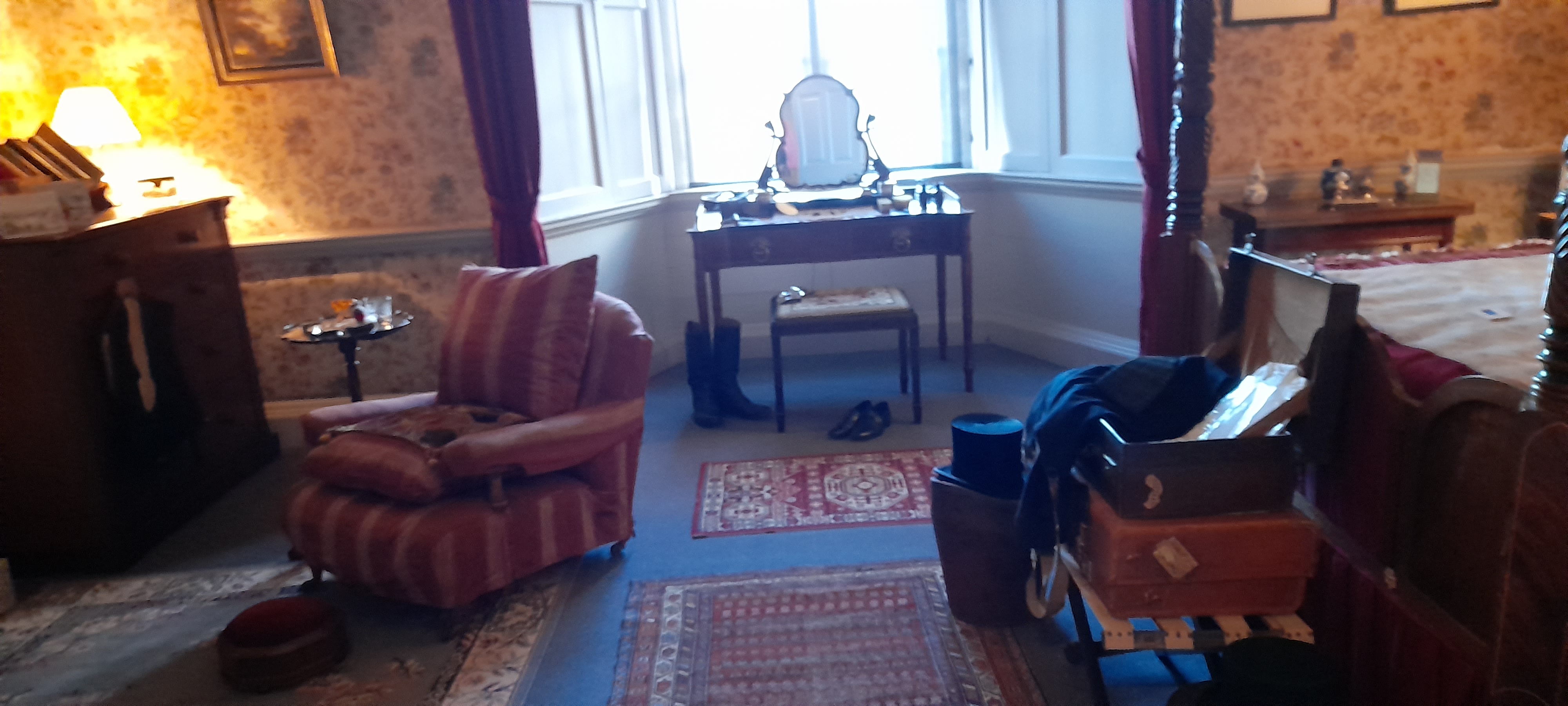
In 1868, George Luttrell asked the architect Anthony Salvin to redesign the castle and create a comfortable Victorian family home. By all accounts he wasn’t afraid to change the exterior, adding towers and battlements. Making it more medieval, which gives it a wonderful atmosphere. 

What I really liked was the bathroom, certainly no tin bath there but hot running water and enough space to stretch out. The bedrooms felt vintage and a home from home.

Now owned by the National Trust – it provided a seasonal and atmospheric Christmas visit and in spite of its medieval past a real homely feel.